Mentorship
What is onsite dental mentorship? How it differs from CE and residency
Onsite dental mentorship means an experienced dentist works alongside you in your own practice, on your own patients, with the opportunity to generate practice revenue while learning. Here is how it works, who it is for, and how it complements dental school, residency, and CE.

RIGHT Mentorship
3 min read

You finished the course. You have the notes, the hands-on model work, a new kit in the cabinet, and possibly even a live clinical experience under your belt. But then the first real case lands on your schedule, and you're the one performing it. The question changes from "how is this done?" to "how do I do this, with this patient, in this operatory, with my assistant?" That is the gap onsite mentorship is built for.
What does onsite dental mentorship look like?
- Case planning before the session. You and your mentor review records, scans and your treatment plan ahead of time.
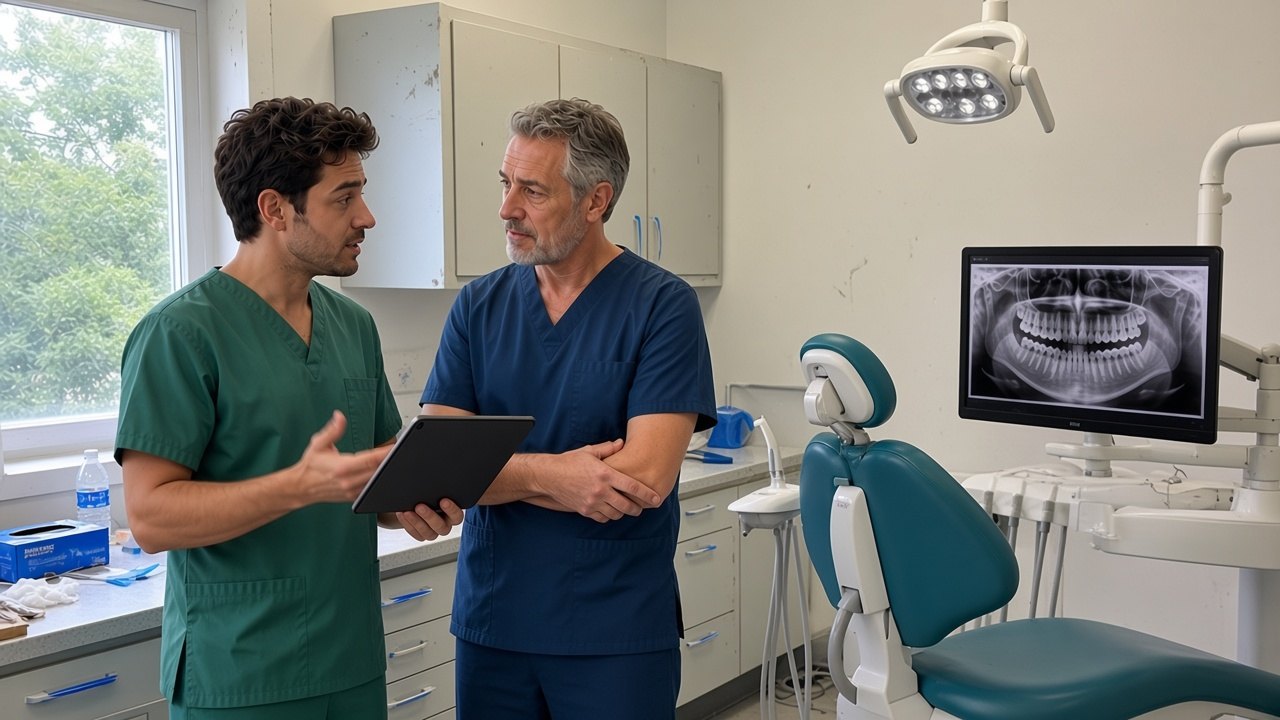
- Chairside guidance on the day. Your mentor works beside you on your patients, in your practice, and talks through decisions as they happen.
- Follow-up afterwards. You share post-op photos and questions so the learning carries into the next case.
You remain the treating dentist for your patients throughout. The mentor brings experience and perspective; you keep clinical responsibility.
How is onsite mentorship different from CE and residency?
- Dental school builds the clinical and scientific foundation every dentist starts from.
- Residency programs offer structured, advanced training over months or years.
- CE courses deliver focused learning on a technique, material or technology, often through lectures and hands-on workshops.
- Onsite mentorship provides individualized guidance as you apply those skills to your own patients, in your own practice, with the opportunity to generate revenue while learning.
They work best together. A CE course might introduce a technique, and a mentor can help you carry it into your first cases with confidence.
Who is onsite dental mentorship for?
- Early-career dentists building experience and confidence in their first years of practice.
- General dentists adding new procedures they have trained for but want support implementing.
- Experienced clinicians refining a technique or bringing new technology into their workflow.
- DSOs and group practices that want to extend access to mentorship across multiple locations.
Why learn in your own practice?
- Your patients. What you learn connects directly to the cases you actually treat.
- Your team. Your assistant learns the workflow alongside you.
- Your equipment. There is no translating from someone else's setup back to yours.
- Your pace. Guidance is tailored to your goals and the questions you bring.
- Your revenue. Because you're treating your own patients, your practice can generate revenue from eligible procedures while you receive mentorship, helping offset the cost of your education.
Is onsite mentorship only for surgery and implants?
No. Surgical and implant procedures are common examples because they are procedure-intensive, but mentorship applies across many areas of dentistry. If you have a specific procedure in mind, ask about mentor availability for it before you book.
How onsite mentorship works at RIGHT
RIGHT connects practicing dentists with experienced clinicians for onsite mentorship. You share your goals and the procedures you want to work on, and RIGHT matches you with a mentor. The RIGHT team reviews every mentor application before that mentor can be matched.
The goal is to make hands-on clinical learning part of your everyday practice, rather than something that always requires stepping away from it.
Not sure what to ask a potential mentor? Start with 7 questions to ask before you choose a dental mentor.
Frequently asked questions
What is onsite dental mentorship?
Onsite dental mentorship is hands-on guidance from an experienced dentist who works with you in your own practice, on your own patients. It focuses on applying skills you have already learned to real cases.
Is onsite mentorship the same as continuing education?
No. CE courses teach techniques and concepts, often to a group. Onsite mentorship is individualized guidance as you apply those skills in your own practice. The two complement each other.
Who is responsible for the patient during a mentored procedure?
You remain the treating dentist and keep clinical responsibility for your patient. The mentor provides guidance, perspective and feedback.
Do I have to travel for onsite mentorship?
No. The mentor comes to your practice, so you learn with your own team, equipment and patients.
Can experienced dentists become mentors?
Yes. Experienced clinicians can mentor through RIGHT as independent professionals. Learn more on the become a mentor page.